

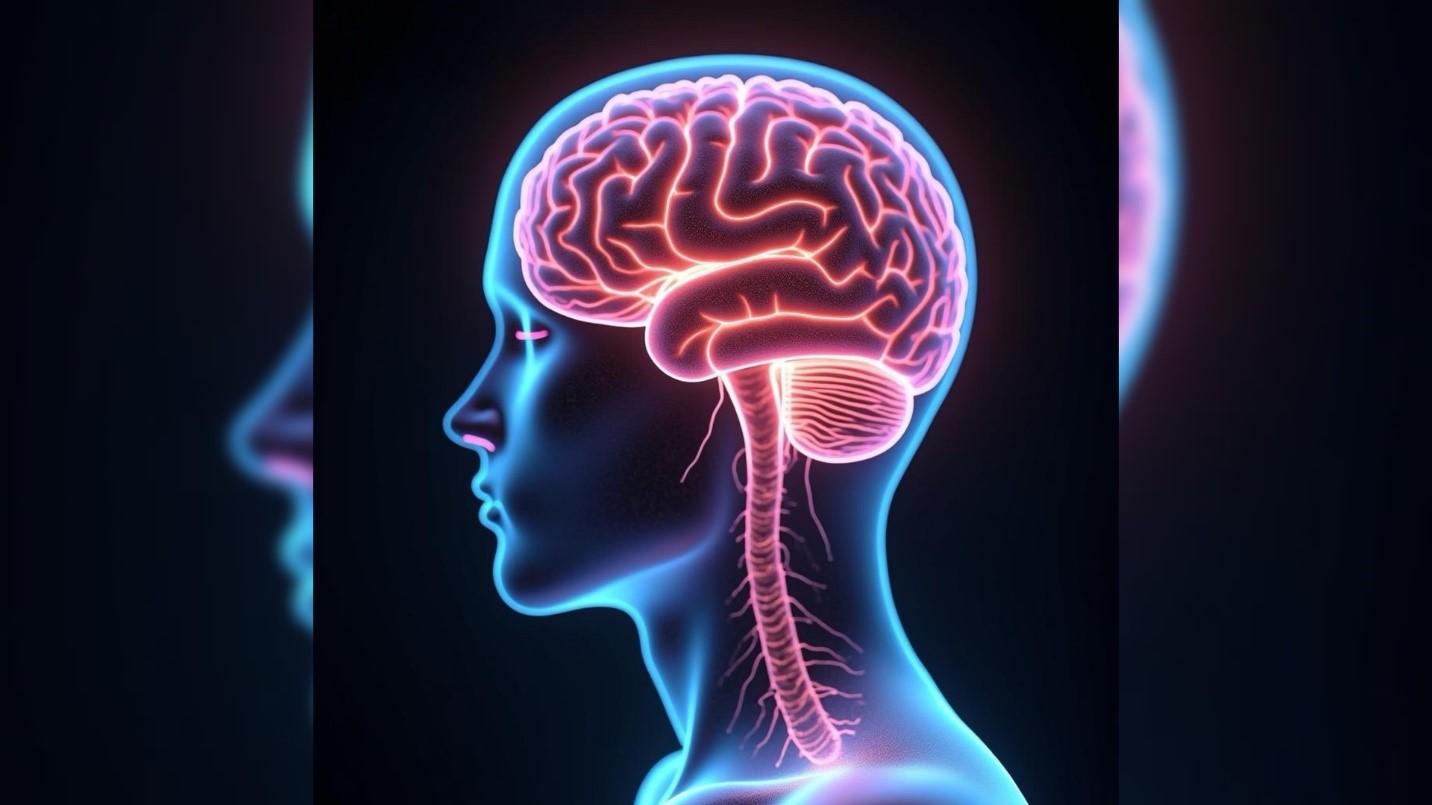
IS THE HUMAN BRAIN INFINITE?
The human brain—a complex and awe-inspiring structure—has long fascinated scientists, philosophers, and doctors. With approximately 86 billion neurons and trillions of synaptic connections, it serves as a biological machine for processing and storing information, the exact limit of which remains an enduring mystery. While various estimates attempt to calculate its capacity, the question still looms: is the human brain infinite?
Dr. Paul J. Reber, a neuroscientist and psychology professor at Northwestern University, has ventured to estimate the brain's storage capacity. In a 2010 interview with Scientific American, Reber suggested that the human brain might store up to 2.5 petabytes of information—roughly equivalent to three million hours of video. However, he emphasized that this is merely an approximation, as the brain doesn't store information in discrete units like a computer. Instead, it utilizes distributed, associative patterns that facilitate flexible data organization and retrieval.
This estimation is complicated by neuroplasticity—the brain’s ability to adapt, reorganize, and form new connections in response to experience and learning. Neuroplasticity not only enhances the efficiency of information processing but also facilitates what can be described as a "dynamic expansion" of memory. As the brain continues to reorganize itself, its capacity for learning and memory seems to grow, defying the notion of a finite system.
Dr. Michael Merzenich, a pioneer in the study of neuroplasticity, has spent his career exploring how the brain can continually reshape itself. In his 2013 book Soft-Wired, Merzenich explains that the brain has the remarkable ability to adapt through experience and learning, achieving changes once thought impossible. According to Merzenich, the capacity to adapt throughout life provides the brain with functional flexibility that mirrors an infinite potential, though not in a strictly physical sense.
In 2016, Dr. Terry Sejnowski, a professor at the Salk Institute and expert in computational neuroscience, contributed further to this perspective. In an article published in eLife, Sejnowski and his team examined synapses and found that they not only transmit information but also serve as dynamic “storage units.” This discovery suggests that the brain has an extraordinary ability to modify its connections, optimizing information storage based on experience.
Dr. Karl Pribram, a neuroscientist and psychologist, proposed the holographic brain model in the 1970s, suggesting that the brain stores information in distributed patterns similar to how a hologram works. According to Pribram, memories are not stored in a single location but are spread across different areas of the brain, which allows it to maintain high flexibility and redundancy in memory storage. Though debated, his holographic model has opened new ways of understanding how the brain organizes and retrieves information.
One of the brain’s most impressive capabilities lies in its ability to engage in abstract thought and creativity. The mind can conceive of infinite ideas, imagine scenarios beyond direct experience, and create concepts that transcend physical limits. This aspect raises the question of whether the brain’s capacity for creativity truly has no bounds. According to neuropsychologist Dr. Elkhonon Goldberg, in his book The Executive Brain (2001), the ability to generate and handle abstract thoughts is among the most complex functions of the brain, embodying a form of “infinity” in mental and conceptual reach. Dr. Goldberg attributes this capacity to the frontal lobes, which enable constant generation of new ideas and flexible adaptation to novel situations.
Despite the brain’s remarkable complexity, it is not without limitations. Its storage and processing capacity are constrained by biological factors such as aging, energy consumption, and neurodegenerative diseases. While it comprises only 2% of the body’s weight, the brain consumes around 20% of the body’s energy. Furthermore, although neuroplasticity allows it to adapt, this ability is not limitless. Neuronal connections may weaken or vanish over time if they are not used regularly, and cognitive abilities can decline due to genetic or environmental factors.
So, is the brain infinite? From a physical and biological standpoint, it is finite. It has a limited number of neurons, it requires energy, and it is susceptible to aging and decay. However, from a functional perspective, its ability to adapt, reorganize, and generate new ideas and connections suggests that its potential may appear virtually limitless. Researchers like Dr. Reber, Dr. Merzenich, Dr. Sejnowski, and Dr. Pribram have made significant strides in unraveling this expansive capability. While the brain is not infinite in a literal sense, its neuroplasticity, ability to store information in distributed patterns, and capacity for abstract thought make it one of the most remarkable and effectively limitless structures in the realm of cognition.
Sources:
- Reber, P. (2010). “How Much Can the Human Brain Store?” Scientific American.
- Bartol, T. M., Bromer, C., Kinney, J., et al. (2016). “Nanoconnectomic upper bound on the variability of synaptic plasticity.” eLife.
- Merzenich, M. M. (2013). Soft-Wired: How the New Science of Brain Plasticity Can Change Your Life.
- Pribram, K. H. (1991). Brain and Perception: Holonomy and Structure in Figural Processing.
- Goldberg, E. (2001). The Executive Brain: Frontal Lobes and the Civilized Mind.