

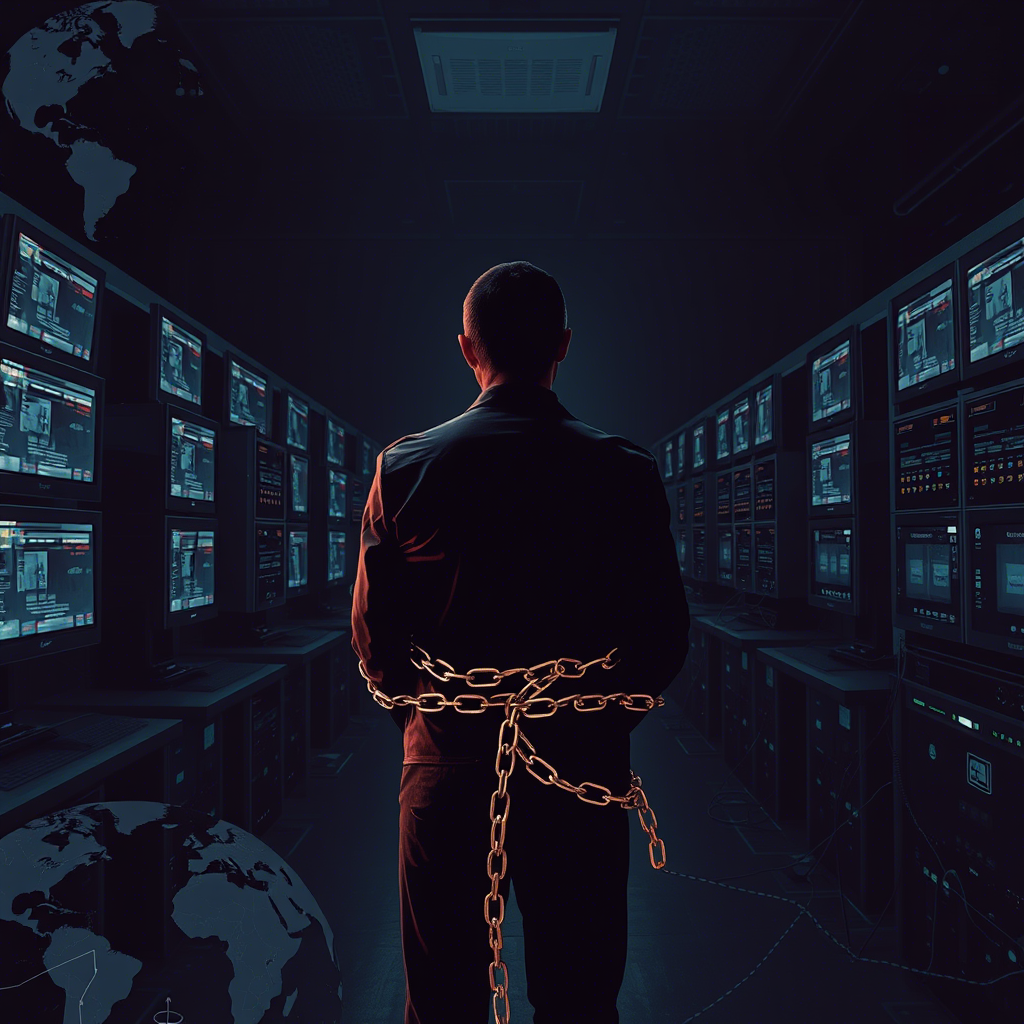
DIGITAL SHACKLES
In an era where the internet was once heralded as a bastion of freedom and a catalyst for democratization, recent developments have cast a shadow over this optimism. The digital realm, envisioned as a space for open discourse and unbridled access to information, is increasingly becoming a tool for surveillance and control.
According to Freedom House's "Freedom on the Net 2023" report, global internet freedom has declined for the 13th consecutive year. The report highlights that 29 out of 70 countries assessed experienced a deterioration in internet freedom, with China being the worst offender for the ninth year in a row. A significant concern raised is the escalating use of artificial intelligence by governments to censor content and monitor citizens, thereby amplifying digital repression. For instance, AI-powered tools are being used to identify and suppress dissenting voices, while facial recognition technologies are deployed in public spaces to track individuals without their consent (freedomhouse.org).
Shoshana Zuboff, in her seminal work "The Age of Surveillance Capitalism," delves into how major tech corporations have pioneered a new economic order. She argues that companies like Google and Amazon have transformed personal data into a commodity, exploiting user information to predict and influence behavior, all while operating outside the bounds of traditional market regulations. This practice not only infringes on individual privacy but also poses a threat to the very fabric of our democratic societies. For example, the Cambridge Analytica scandal revealed how Facebook’s data was weaponized to manipulate voter behavior, while Amazon’s algorithms have been criticized for reinforcing biases in hiring and law enforcement.
The implications of these findings are profound. The internet, which was once a tool for empowerment, is increasingly being weaponized against its users. The convergence of governmental overreach and corporate exploitation has created a digital environment where freedom is curtailed, and personal autonomy is undermined. Activists face heightened risks of being surveilled, journalists are targeted for their reporting, and even ordinary citizens are subjected to invasive data collection practices that strip away their privacy.
To counteract these digital shackles, it is imperative for civil society, policymakers, and the global community to advocate for robust regulations that protect user rights. For instance, the European Union’s General Data Protection Regulation (GDPR) has set a global standard for data privacy, requiring companies to obtain explicit consent from users before collecting their data. Similarly, encryption technologies can empower individuals to secure their communications and protect their digital identities. Organizations like the Electronic Frontier Foundation are at the forefront of this battle, striving to defend civil liberties in the digital world. However, the onus also falls on individuals to remain vigilant, demand transparency, and hold both governments and corporations accountable for their actions in the digital sphere.
While some argue that surveillance is necessary for national security or crime prevention, the lack of oversight and accountability often leads to abuse. For example, in countries like Russia and Iran, surveillance tools are routinely used to suppress political dissent and target marginalized communities. Even in democracies like India, the proliferation of internet shutdowns and invasive data collection practices raises concerns about the erosion of civil liberties. Striking a balance between security and freedom requires transparent oversight mechanisms and strict adherence to human rights principles.
It is a fact that the digital age has ushered in unprecedented opportunities; however, it has also introduced new forms of control and surveillance. Recognizing and addressing these challenges is crucial to ensuring that the internet remains a free domain rather than a tool of oppression. As individuals, we can take steps to protect our digital rights by using privacy-focused tools like VPNs (such as Proton VPN) and encrypted messaging apps, supporting advocacy organizations, and demanding accountability from those in power. The fight for a free and open internet is not just a technological struggle; it is a fight for the future of democracy itself.